YOU ARE WHAT YOU TWEET: Defamation in 280 Characters

See the source image

EMERGENCE OF SOCIAL MEDIA 

Over the last two decades, the presence of social media has grown to encapsulate an overwhelming amount of the cultural psyche. These sites, such as Facebook and Twitter have grown to dominate media industries, and become a significant part of people’s lives. However, with the emergence of these sites as mainstream ways to present information, so too has emerged the plethora of legal and ethical issues that are usually associated with media presentation. 

While social media presented a new way to communicate, to share and engage with people and content in a new and engaging way, many people saw this as somewhat a place of no consequence, where the harshest penalties were being blocked, or the dreaded 30 day suspension. This is to say that a large portion of users consider social media to be detached from reality, and as a result are unaware of real world consequences that can stem from online actions. Among the myriads of lost jobs, relationships and opportunities, social media users have been slow to learn that online actions present offline consequences, and this has never been truer than in seeing the emergence of defamation cases stemming from online posts, particularly on Twitter.  

DEFAMATION AND TWITTER 

Defamation refers to material published or distributed that causes a loss of reputation for a person or small business, according to Slater and Gordon Lawyers.In Australia, uniform defamation laws came into place in 2005, which beforehand greatly lacked uniformity. However, even since the unification of Australian defamation laws, the prevalence of online and social media has skyrocketed, and the number of online defamation cases has gone with it.

The University of Sydney Technology has reported that over 50% of defamation cases between 2013-2017 were ‘digital’, or related to online matters. Of these online cases, 20% came from Facebook, and 5% from Twitter. These were the only social media sites represented, with the remaining cases distributed among email, text, Google, and websites (non mainstream media). This means that in the ten years since Twitter was launched, it has grown to accommodate a significant portion of total defamation cases. Such is the prevalence of these social media defamation cases, that Judge Judith Gibson of the NSW District Court has stated that 

“an overwhelming majority of defamation cases before the courts derive from social media. The country’s defamation laws, which date back to 2006, are out of step”. 

So, with social media growing to accomodate a significant part of our everyday lives, it is more important than ever that people are conscious and aware of the real world consequences that stem from online actions, particularly through Twitter. There are numerous studies to illustrate this, both locally and internationally, that emphasise the significance of online defamation. 

SPOONER v. THE ASSOCIATED PRESS (USA)

Bill Spooner v. The Associated Press was a 2011 Twitter defamation case, and a sage reminder to all journalists to be cautious of their online presence. The case was brought by Spooner, an NBA referee, who claimed that sports writer Jon Krawczynski published a defamatory tweet regarding his objectivity during a game he was refereeing. Krawczynski, who was covering the game for The Associated Press, a not-for-profit American news agency. Krawczynski’s (since deleted) tweet read 

“Ref Bill Spooner told Rambis he’d ‘get it back’ after a bad call. Then he made an even worse call on Rockets. that’s NBA officiating folks.”  

This tweet seemingly suggested that Spooner had unfairly favoured one team, which of course carried connotations of match fixing. The incident came in the wake of the Tim Donaghy scandal, which saw an NBA referee betting on games he was refereeing, conspired to fix games, and eventually served a 15 month prison sentence. With this context, a tweet suggesting that Spooner was a corrupt referee had the potential to be devastating, and in Spooners’ eyes amounted to defamation. 

In his lawsuit, Spooner claimed that he faced a disciplinary investigation by the NBA, and that “his professional reputation has been hurt”. Spooner was seeking damages of $75,000, as well as the removal of the tweet. The damages were considered to be secondary, as he was primarily concerned with ensuring he distanced himself from Donaghy and the corrupt NBA officials. This was ultimately represented in the outcome of the lawsuit, with Spooner agreeing to drop the suit in exchange for the deletion of the tweet in question, and a payment of $20,000 for Spooners legal costs. While this case did not go to trial, it is still a very significant case in terms of twitter defamation, as it shows a journalist sued for defamation while in the process of working. 

MICKLE v. FARLEY (AUS)

Mickle v Farley, which made history as the first Twitter defamation case to make it to a full trial in Australia, was a 2013 case that saw teacher Christine Mickle sue ex-student Andrew Farley regarding a series of posts on Facebook and Twitter that were defamatory towards her. Farley, whose father was a teacher at the same school, made the posts about Mickle regarding the fact that she took his father’s position. The posts were of an abusive, and among other things read

“Like I said I can post whatever the fuck I like and if you don’t like it block me so you don’t have to read it. I don’t give a shit … if any one gets hurt over what I have to say about her.”

Allegedly, Farley believed Mickle had played a role in his father’s dismissal, and was taking out his frustrations via social media. The postings had a significant effect on Mickle, who took sick leave following the posts, and was only able to return to work on a limited basis. 

As mentioned, Mickle v. Farley was the first Australian Twitter defamation case that went to a full trial, and the results of the case sent a strong message to social media users: be careful what you post online. In total, Andrew Farley was ordered to pay $105,000 in damages to Christine Mickle. This included an initial $85,000, plus an extra $20,000 in aggravated damages due to the defendant (Farley) initially claiming he was truthful, and then providing what was considered an insincere apology. Regarding the nature of the case, Judge Michael Elkaim stated that

“when defamatory publications are made on social media it is common knowledge that they spread. They are spread easily by the simple manipulation of mobile phones and computers. Their evil lies in the grapevine effect that stems from the use of this type of communication”

Essentially, what the judge is saying is that by using social media, people are inherently aware of the nature of the platforms, and therefore if a defamatory is made it is able and likely to be shared, which then increases the defamatory nature of said postings.               

COMPARING AND CONTRASTING CASES 

While both listed cases are greatly significant Twitter defamation cases, they also differ greatly in both their content and context. The largest and most obvious distinction between the two is that they took place in different countries, and therefore operating under slightly different legal frameworks. In America, defamation is still split between ‘libel’, which refers to written material, and ‘slander’, which is spoken. Additionally, these laws differ from state to state. In Australia, defamation is a single tort, and have the same defences. These were unified in 2005, when defamation became a unified national law. The cases are also split in their outcomes, with the American case settled out of court, whereas the Australian case went all the way to trial, the first of its kind. However, the cases greatly reflected each other when coming to the terms of the outcome; both defendants ordered to pay the plaintiffs a sum of money, as well as removing the posts in question.

Overall, both cases showed the significance of someones online actions, and how they translate to a real world setting. Actions have consequences, and social media is no different, so it is imperative that all social media users are acutely aware of what they are posting, and if it could be construed as defamatory.   

Lie for Truth: Making a Killing

Is it ever justifiable for journalists to lie to uncover a “big truth”?

Journalists often disagree on the ethical stance of whether lying to uncover ‘big truths’ is justifiable. Journalists debate the need for undercover journalism with the method widely considered as illegitimate and unethical, whilst others investigative work is praised as fair practice with the Washington Post receiving a Pulitzer prize in 2007 for an undercover investigation.

Although often regarded as deception, lying can be considered legitimate if the intention is to uncover stories that are in the public interest that would have no traditional journalistic means of sourcing, as stated in the Society of Professional Journalists code of ethics (SPJ)

“avoid undercover or other surreptitious methods of gathering information…unless traditional, open methods will not yield information vital to the public”.

Therefore it is justifiable for journalists to lie when uncovering big truths if the story is found to be in the public interests and traditional methods of sourcing are unavailable.

When might a journalist obscure the truth of their identity in pursuit of the truth in a story?

Human behaviour is an area in which can be described as grey and unclear in the reasoning as to why we do what we do. This unclear and grey area of behaviour is displayed within the media industry and furthermore within journalism and undercover or investigative journalists  Due to this there is a side of human behaviour which can be described as unethical and at times verges on being illegal.  

Within the world there are multiple cases of unethical and illegal behavior being undertaken which requires investigative journalists to lie about their identity in order to gain access to observe these behaviours. This includes the investigative journalist manipulating their identity to gain access to inside information about the race industry.

Case Study: Making a Killing

On Monday, the 16th of February 2015, ABC’s Four Corners aired an episode titled ‘Making a Killing’, an expose on the Australian greyhound racing industry. Over the course of 45 minutes, secret footage and undercover journalists are shown infiltrating training tracks in Queensland and Victoria, ultimately finding conclusive evidence of live animals being used as bait, a practice that has been both banned in greyhound racing, and broadly criminalised for decades. 

Dogs and trainers were both tracked from race meets and private training facilities, in addition to journalists systematically infiltrating the racing industry. 70 individuals were implicated as a result of this investigation, which sent shockwaves through the racing industry and led to widespread criticism. 

Legal and Ethical Issues

The Australian Privacy Act 1988

  • Media outlets are exempt from the 1988 Privacy Act, provided the organisation meets certain requirements, including being publicly committed to standards that deal with privacy. This exemption promotes the public interest in freedom of expression and the free flow of information critical to the maintenance of a democratic society.

MEAA code of ethics

  • Use fair, responsible and honest means to obtain material. Identify yourself and your employer before obtaining any interview for publication or broadcast. Never exploit a person’s vulnerability or ignorance of media practice.

Fires, Fitness, Fear of Death: Audio Features on Triple J’s ‘Hack’

On Thursday the 5th of December 2019, Triple J presented an episode of ‘Hack’ featuring three segments; on the NSW bushfire crisis, the Netflix documentary ‘The Game Changers’, and the use of exposure therapy in treating ‘death anxiety’. Over the course of thirty minutes, Hack uses a multitude of audio techniques to create an engaging show that is able to cover an array of topics in a succinct and informative way.

The first segment of this Hack episode focuses on the (at the time) current NSW bushfire crisis, and featured a one on one interview between Hack host Tom Tilley, and the RFS’ Greg Allen. Running for just under four minutes, the segment is more of a safety update, on the status of the fires and the areas that were in danger.

While this segment does not feature a large amount of audio techniques, being an interview, the introduction to the piece is a grab from a newsreader on the fire conditions, overlayed with a guitar riff:

By introducing the segment using the grab of a newsreader, the story is immediately shown to be significant and highly relevant. The addition of the guitar music gives the segment an emotive feel, and further engages the audience to what they are about to hear. While a relatively short introduction, it effectively sets the tone and direction of the segment, as an update on a current event. The rest of the segment is a traditional interview format, which by itself is engaging as it refers to crucial public safety information.

The second feature, and title feature of the episode, revolves around a recently released Netflix documentary ‘The Game Changers’, a film about elite athletes who have adopted a vegan or plant-based diet. It was released to mixed reception, with many claiming the documentary had cherry-picked its information, and was more akin to propaganda.

This segment is split into three parts; it begins with a montage of soundbites taken from the film, followed by a three way interview between host Tom Tilley and two experts, and finally taking audience questions and opinions.

The montage that is used at the start of this segment is crucial, as it provides a short summary for those unfamiliar with the documentary, and somewhat sets the tone for the segment:

A compilation of sound bites are put together from the documentary, which mostly includes a variety of people making claims about the benefits of a plant based diet, as well as the detriment of eating meat to a persons health. This sets the tone of the upcoming interviews, as the talking points mostly revolve around the health claims this documentary makes. Ironically, the audio features used within the documentary also lend themselves very well to the Hack segment, but in almost the opposite way as originally intended.

Following this, the segment moves into a series of interviews between Tom Tilley and two health experts. The first is Anna Debnin, who has a masters of Nutrition and Dietetics. Debnin states that she is coming from neither a pro or anti vegan standpoint, but while she considered it a positive documentary, she did find the data to be highly cherrypicked, with the producers, hosts and scientists all being vegan or vegetarian. Debnin then continues to say that she thought they should have included both sides of the argument in the film, as well as being highly selective about what is represented.

The next interview is with Simone Austin, the dietician for the Hawthorn football club. Immediately the sound quality for this interview is noticeably lower quality, appearing to be talking over the phone rather than in a studio. Austin immediately takes a stand against Game Changers, saying “we need to call it a movie, not a documentary”. She goes on to state that the film is somewhat misleading, as a meal being vegan does not immediately make it healthy, as the documentary may suggest.

Both the interviews with Austin and Debnin are longer interviews, with more of an opinionated angle than that of the fire chief in the first segment. This is due to the nature of the subject being discussed, with the Game Changers being a discussion, whereas the bushfires piece was a safety/PSA segment. They are mixed together, to create more of a round table discussion, rather than two stand alone interviews. Both Game Changers interviews seem to agree that while the film is well-meaning, it is also highly biased and shows somewhat distorted data.

The segment then ends with the host Tom Tilley taking calls from the audience about their reaction to the documentary, if it had changed their diets, as well as opening up a dialogue between the audience and the experts to answer any questions. This Q&A was an effective way to end the segment, showing how the general public reacted to the film in comparison to the experts.

The third segment of the Hack episode is a package about people who suffer death anxiety, and how it can be treated by shock therapy. A package by journalist Terry Campbell, this segment takes the audience through the practices of shock therapy, and features grabs from both people who suffer from death anxiety, and from experts and doctors who help them treat it.

Briefly introduced by host Tom Tilley, Campbell narrates the piece, which opens with a grab of Rachel Menzies, a registered psychologist who is an expert on death anxiety. Menzies is featured significantly throughout the episode, as well as different people who have suffered from death anxiety. The following clip shows two grabs being used together, connected by the host in an essay-like fashion:

This piece has the grabs connected in a very effective, succinct fashion, where they are both strengthened by the inclusion of the other. The underlying music also sets the tone of the piece very well, an eerie, sombre mood that fits the death themes, but also the exploratory, inquisitive nature of the segment. The tone and pace of the music picks up as the piece continues into Menzies talking about possible solutions and therapies for dealing with the death anxiety. These include introductory methods such as watch dark comedies about death, all the way up to placing yourself inside body bags.

Following the completion of the package, host Tom Tilley then has an interview with Dr. Kerrie Noonan, another expert on death anxiety. Noonan mostly agrees with the findings of the story, saying that is important to engage with death and dying, as avoidance will ultimately make the issue worse. She compares Western death processes and rituals to that of other cultures, and says comparatively we have a somewhat rushed process, which leaves little time to grieve appropriately. Tilley then ends the segment by reading viewer texts, who offer mixed opinions on the issue.

Overall, the three segments on this episode of Hack are significantly different, as each segment tries to convey a slightly different tone and message. All three segments feature interviews, but are all undertaken for different reasons. The first segment is a safety update about a national threat (bushfires), the second is a discussion about a relevant cultural issue (the Game Changers film), and the third is an informative piece on a little known practice (shock therapy for death anxiety). The varied nature of this episode is what makes it engaging, as each segment provides something new and interesting, with no part running too long. Through the use of grabs, audio montage, backing music and multiple interviews, Triple J’s ‘Hack’ is able to create an engaging and informative current affairs audio feature.

PETA v. Slater: The Monkey Selfie

Legal Issues of the Case:

Copyright law protects owners of original material by giving them exclusive rights to their content. Copyright owners have the power to prevent others from reproducing or using their work without their authorisation. In September 2015, People for the Ethical Treatment of Animals (PETA) sued nature photographer David Slater on behalf of Naruto, a black ape from Indonesia. Naruto took a ‘selfie’ on Slater’s camera which was then sold to newspaper companies and published on Wikimedia and other blogging sites. The two parties debated whether Naruto, who captured the image or Slater who possessed the camera, owned the rights to the photo. The case also questioned whether animals could be the owners of copyright. 

Arguments of the Parties

SLATER

The story of the monkey selfie began in 2011, when Slater traveled to Indonesia and spent several days photographing a troop of macaques. Slater stated that “I wanted a close-up image but I couldn’t do it. They were too nervous, so I had to get them to come to the camera without me being there and get them to play with the release, which they did”. He added: “They were looking at the reflection in the lens, which they found amusing”.

“I became accepted as part of the troop, they touched me and groomed me … so I thought they could take their own photograph. I set the camera up on a tripod, framed [the shot] up and got the exposure right … and all you’ve got to do is give the monkey the button to press and lo and behold you got the picture.” Although the images became very popular very quickly, it became a huge complicated legal dispute in 2014, when Slater asked Wikipedia to stop using his images without permission and Wikipedia denied as the images were uncopyrightable as the Monkey is the creator of the photo. In 2015, PETA, filed a suit against Slater on behalf of the monkey, which it identified as a six year old male named Naruto, claiming that the animal was the rightful owner of the copyright. 

In a court case, slater stated that “I know for a fact that the monkey in the photograph is a female and it’s the wrong age. I’m bewildered at the American court system. Surely it matters that the right monkey is suing me”

“These animals were on the way out and because of one photograph, it’s hopefully going to create enough ecotourism to make the locals realise that there’s a good reason to keep these monkeys alive, the picture hopefully contributed to saving the species, that was the original intention all along. For centuries many humans, including slaves, women, children and Jews were not persons, but things. However that changed with time. PETA’s strategy in this case was fatally flawed. “PETA presented no appropriate evidence that Naruto was a ‘person’ who would have any right, much less a claim-right.” Still, it seems increasingly possible that in the future, monkeys and other creatures seeking to protect their legal rights could indeed succeed in court.

PETA

  • “ The complaint alleges that Dr. Engelhardt has studied the crested macaques in Sulawesi, Indonesia for over a decade and has known, monitored, and studied Naruto since his birth. The complaint does not allege any history or relationship between PETA and Naruto.2 Instead, the complaint alleges that PETA is “the largest animal rights organization in the world” and “has championed establishing the rights and legal protections available to animals beyond their utility to human beings . . . .”
  • Claimed ‘next friend’ as a way to litigate on behalf of Naruto, but court found that there was not a significant enough relationship for this to be true.

Case Outcome

Upon concluding the case, judges ruled in favour of Slater, finding that the arguments brought forth by PETA on Naruto’s behalf were not satisfactory. This decision was based upon a quantity of key legal points which were put in place by the judges in their verdicts.

The first of these verdicts related to PETA’s eligibility to bring the case to court on behalf of Naruto as a ‘next of friend’. Although PETA had declared their ‘next of friend status’ upon the fact that their organisation had routinely studied and come into contact with Naruto and the other monkeys in his reserve, the court ruled otherwise.

In their findings, the judges affirmed that the organisation had no claim to bring forward the matter on Naruto’s behalf, as PETA could not establish that it’s relationship with Naruto was “any more significant than its relationship with any other animal” (Tucker/Arenberg, 2018).

Despite PETA’s ‘next friend’ standing being rejected, the court still moved to consider whether Naruto had the right to bring a case forward to court.

In their discussion, judges had to consider the case of Cetacean Community v Bush 2004, which dealt with similar matters relating to animals bringing forth matters in the court of law.

In this case, the court determined that there was “…no reason why Article III prevents Congress from authorizing a suit in the name of an animal, any more than it prevents suits brought in the name of artificial persons such as corporations, partnerships or trusts, and even ships, or of juridically incompetent persons such as infants, juveniles, and mental incompetents” (E. Halpern, 2018).

As a result of this binding precedent, the court had to acknowledge that Naruto did have Article III standing, and therefore possessed the right to bring forward a case inside court.

However although Naruto was found to have standing under Article III, the monkey’s right to make a copyright claim under the Copyright Act 1976 was not upheld. This was once again based upon criteria established in the case of Cetacean Community v Bush 2004, which set forth a statutory rule that “…“If an Act of Congress plainly states that animals have statutory standing, then animals have statutory standing. If the statute does not so clearly state, then animals do not have statutory standing.” (Naruto V Slater 2018). The Copyright Act 1976 does not make any specific statements of this nature, and as a result, Naruto’s claim was promptly dismissed.

“We must determine whether a monkey may sue humans, corporations, and companies for damages and injunctive relief arising from claims of copyright infringement. Our court’s precedent requires us to conclude that the monkey’s claim has standing under Article III of the United States Constitution. Nonetheless, we conclude that this monkey—and all animals, since they are not human—lacks statutory standing under the Copyright Act. We therefore affirm the judgment of the district court.”

Settlement was decided where Slater agreed to donate 25 percent of any future revenue from the images to charities dedicated to protecting crested macaques in Indonesia.

When Pro-Sports Meet Protests: The Ringer’s Hong-Kong Coverage

On the fourth of October 2019, the Houston Rockets general manager Daryl Morey retweeted a graphic, with the message “Fight for Freedom, Stand with Hong Kong”. Ten days later, LeBron James publicly opposed Morey’s statement at a press conference, saying “I don’t want to get into a feud with Daryl Morey, but I believe he wasn’t educated on the situation at hand, and he spoke, and so many people could have been harmed, not only financially, physically, emotionally, spiritually.” From this, tensions between the NBA and China/Hong-Kong peaked, and opened many peoples eyes to the escalating protests in Hong-Kong.

Writing for The Ringer, Jordan Ritter Conn delivered a first hand account of the protests, providing it through the lens of the NBA’s impact on the clashes in his piece “‘This Should Be a Wake-up Call to the Whole World’: Inside the Hong Kong Protests.” The written piece incorporates his account of the protests from the ground in Hong-Kong, and features a number of interviews with protestors and people in and around the situation.

The accompanying video “What the Hong Kong Protest Looks Like on the Ground”, is somewhat of a narrated photo-essay, containing photos and videos from the protests again narrated by Ritter Conn. The video helps provide context to the written piece, showing the situation that these protestors are facing, and providing an insight to what he as a reporter was seeing.

‘What the Hong Kong Protest Looks Like on the Ground’

Peter Martin’s ‘THE MOJO IN THE THIRD MILLENNIUM‘ states that “In an era of heightened newspaper and television competition driven by steadily declining North American readership and viewer numbers, many media managers have embraced with enthusiasm the solo journalist—able to move fast and travel light, at lower cost than traditional news teams.” This is definitely the case in Ritter Conn’s piece for The Ringer, with a solo journalist on the ground in Hong Kong covering the protests, both through interviews and a written piece, as well as photos and videos of the unfolding situation.

Social media also played a large role in this story. The initial story stems from an issue on Twitter, and is written for The Ringer, a purely online publication that features extensive social networking. The role of social media in this story can be explained by Susan Jacobson, who states that “the news now finds itself thrust into the realm of the digital, where it is increasingly likely to show characteristics associated with native digital formats such as hypertext, video games and social media.”

Jordan Ritter Conn’s piece for The Ringer about the Hong Kong protests uses multi-media highly successfully in delivering an in-depth and engaging story straight from the source. Through a written piece, and an accompanying narrated video, Conn delivers a first hand account of the protests and how the people in Hong Kong have reacted to them, as well as their reactions to comments made by NBA figures Daryl Morey and LeBron James. This array of multi-media storytelling features is highly effective in providing an informative and engaging coverage of a highly nuanced issue, in a way that sports fans and the general public can understand.

Locals Only: DA and Contextual Essay

Locals Only, a sports interview podcast, available here.

Contextual Essay

My Digital Artifact is ‘Locals Only’, an interview podcast focused around top level athletes from Wollongong and the Illawarra region. This was a project I wanted to develop as it combined my interest in sports journalism with my passion to grow and develop different technical skills around audio editing. A podcast was not a format I had previously engaged with, and I was keen to step outside of my comfort zone and experiment with different media formats. I looked to existing podcasts such as Dissect, Villains, and primarily The Woj Pod to model my podcast off of. I had hoped that this DA would improve my skills as a journalist.

Wollongong is a city which is fiercely proud of its own, and while sports are a large focus of the cultural psyche, Illawarra sports fans are often unaware or not informed about their home grown athletes. The aim of this podcast was to entertain, as well as provide information and insight into the Illawarra local sporting stars, as well as bring to light the accomplishments of some athletes who may have flown under the radar thus far. In creating a local sports podcast, I hoped to interview Illawarra sports stars, and engage with Illawarra sports fans.

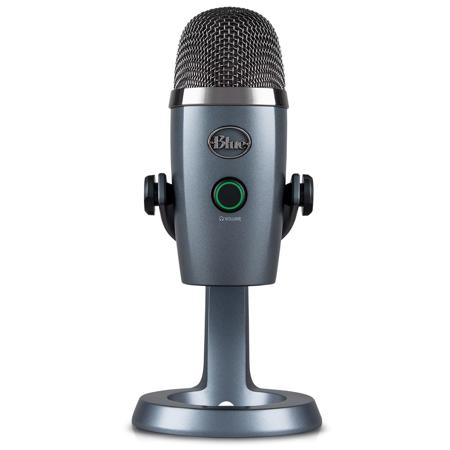
I chose to publish Locals Only through Anchor.fm, as it enabled me to have my podcast published on a number of different streaming sites. This was successful, as it was published on a number of sites, including Google and Apple Podcasts. I also created a Twitter account for Locals Only, with the intention of running a ‘questions from the audience’ segment. However, it became quickly apparent that I did not have the necessary engagement to make this feasible, only receiving one or two questions for each episode, and often from the same audience members. I faced significant technical difficulties in recording the first two episodes, with the University recorders malfunctioning and forcing me to re-record both interviews. This lead to me purchasing a podcasting microphone of my own, which both improved sound quality and helped avoid any other equipment errors.

Generally, the season premiere received an outstanding viewership, with 124 plays. However, the viewership dramatically decreased for the second episode, only receiving 47 plays. Episodes three and four also decreased, with 39 and 20 plays respectively. While this decrease in viewership was to be somewhat expected, it was also indicative that I needed to find a way to make the podcast more engaging going forward. Overall I feel extremely positive with the progress of Locals Only to this point, as I feel that it has definitely addressed its utility in being a provider of entertainment and local sports content. Going forward, I feel I could increase the online presence of the podcast through spreading to different social platforms, such as Facebook and Instagram. Additionally, producing episodes more consistently will help engage a greater following and maintain those who are interested in my content. Through this process, I have learnt that there may have been a smaller niche for local sports than I assumed, but a much more passionate following as well.

Generally, the season premiere received an outstanding viewership, with 124 plays. However, the viewership dramatically decreased for the second episode, only receiving 47 plays. Episodes three and four also decreased, with 39 and 20 plays respectively. While this decrease in viewership was to be somewhat expected, it was also indicative that I needed to find a way to make the podcast more engaging going forward. Overall I feel extremely positive with the progress of Locals Only to this point, as I feel that it has definitely addressed its utility in being a provider of entertainment and local sports content. Going forward, I feel I could increase the online presence of the podcast through spreading to different social platforms, such as Facebook and Instagram. Additionally, producing episodes more consistently will help engage a greater following and maintain those who are interested in my content. Through this process, I have learnt that there may have been a smaller niche for local sports than I assumed, but a much more passionate following as well.

How It’s Made! Locals Only and the Making Stage

The making stage of my DA, sports podcast ‘Locals Only’, saw the refinement of the social media aspect of the project, as well as publishing an episode of the podcast in which I took on the advice that came from the previous stage of the DA. Locals Only is an interview podcast series in which I speak to high level Wollongong athletes. We talk about where they are up to in their sporting career, and how they got to that stage through their upbringing in Wollongong.

The fourth episode of Locals Only featured Wollongong AFLW player Kate Stanton, and was the first episode that did not feature the ‘questions from twitter’ segment that I had tried to implement in the previous episodes. By dropping this segment, the episode felt a lot more fluid and natural, as I was not trying to shoehorn in questions and disrupt the flow of the conversation.

Statistically, the episode performed just below average, but was still within the range of the other episodes already published. The average audience size sits at around 20 consistent listeners, and overall the podcast has amassed 230 total plays over the four episodes. I am more than pleased with this result, as a small but consistent fan base was what I had aimed to build all along, finding the niche of local sports fans to be limited but highly passionate still. I also believe that by covering a wide array of sports in the episodes so far that the content was fresh and engaging, and kept those listeners interested in upcoming episodes, rather than burning them out with the same repeated content.

I also aimed at using the Locals Only Twitter page to build and maintain engagement with my fan base, particularly around upcoming episodes, but also in bringing attention and views back to earlier episodes, to try and engage the audience to a greater degree.

By bringing attention to previous episodes I hope to both bring awareness to them, but also maintain the engagement of fans through a longer period without an episode, owing to technical difficulties and scheduling problems which I faced. However, by bringing attention to these earlier podcast episodes I was also able to see how my podcasting style had grown and develop over the course of this DA, and also showed the areas in which I can still improve or adjust.

While this is the last module of the DA process, there is still much room left for growth and development in the making of Locals Only. I hope to continue to create this podcast, and hone my interviewing, audio editing and general computer skills, as I create engaging content for both Illawarra sports fans, and hopefully down the track for sports fans in general.

All episodes of Locals Only can be found here, keep an eye out for more to come!

SUBMERGED

On the surface, solo-diving is one of the most dangerous hobbies for a person to have. Already at a high risk of an accident or emergency, solo-diving leaves no room for error.

But that’s the thing about diving. You have to look deeper than the surface.
For Lachlan Campbell, the appeal comes from a more traditional approach to diving.

“Free diving by yourself is amazing sometimes. I love how primitive it feels, like how it would have been when spearfishing first started” said Campbell. 

This hunter-gatherer mindset is what has drawn many to diving, the opportunity to live off of the land so attractive to those who wish to have a more sustainable lifestyle. 

“I really enjoy the feeling of harvesting and gathering my own food and being able to share this fresh produce with my friends and family,” he said. 

While there are limits and restrictions on fishing and cray diving in Australia, most divers tend not to take anymore than they need.

A focus on conservation and sustainable living is one which goes hand in hand with a deep respect for the ocean, and an understanding of just how interconnected the environment truly is. 

“The fact that you’re able to cut out the middleman, the processing stage of food production, is pretty incredible” said Campbell.

It isn’t just diving either. This passion for sustainability has seeped into Lachlan’s everyday life, and has changed the way he views a lot of things.

“Having a sustainable life on all fronts would be amazing. I’d love to have a veggie garden, chickens, etc… the combo of that with freediving for seafood is beautiful,” said Campbell.

However, Lachlan’s intimate connection with the ocean extends beyond sustainable living, and acts as a separate world in which he feels at home and completely comfortable.

His attachment with the ocean started early, three years old and surfing with his dad on an old tattered surfboard at Batemans Bay. As he grew, so too did the allure of the sea. 

“I always wanted to experience what it was like to be under the water, instead of just paddling around on top of it. Although I took to diving a bit later, I feel it’s the strongest connection I have with the ocean,” he said.

While he does not consider diving as an escape, for Lachlan it is a good distraction from the stress of daily life.

It’s the place where he feels most at home, and a place that provides him the chance at a sustainable, happy and healthy lifestyle. He, of course, puts it best, and most simply:

“I tend to always feel the happiest when I’ve come in from diving.”

PROTOTYPING: Locals Only in Action

The prototyping stage of my Digital Artefact has seen the continuation of the Illawarra based sports podcast, ‘Locals Only’. Locals Only is an interview podcast series in which I speak to high level Wollongong athletes. We talk about where they are up to in their sporting career, and how they got to that stage through their upbringing in Wollongong. I also have a Twitter account to engage with my audience. Through this stage, I made tweaks and amendments to the process and how I composed each episode, to produce a better flowing, more engaging product to attract greater attention and interest.

I have now published three episodes of ‘Locals Only’, and while the views are down from the premiere episode, they have maintained a consistent following. A drop off is expected after a premiere, but the following two episodes have had similar views, showing that there is consistent engagement. The most significant change that has come from this stage has been the removal of the ‘questions from Twitter’ feature that I had tried to implement in the first three episodes. While it was a goal of mine to have audience interaction, the replies and questions were not consistent enough to warrant a continued segment, especially when the questions were coming from the same few people. This was to be expected considering the limited size of my twitter base, however I had hoped for a higher rate of interaction.

Another issue that I encountered to a large degree was the editing software I was using. Up to this point, I had been using the program ‘Hindenburg’ to edit the podcast. However, with my free trial of the program ending, I have elected to start using Adobe Audition. It is another relatively easy to use program, which I have access to through my university and I have experience using in the past.

I also looked for audience feedback in relation to the direction of the podcast a number of times during the prototyping stage. I looked for which sports and sports people would garner further interaction, which sports my audience would like to see covered, and was met with some surprising results. There was a large request for local athletes and high level players who had not quite reached the elite level, as well as requests for a number of more alternative sports. I also suggested the idea of spin off segments or episodes, focusing on a theme rather than an individual athletes. One such idea was a round-table interview featuring the captains of the winning Rugby League, Rugby Union, AFL and Soccer teams from the respective local competitions. This ‘Grand Final Wrap’ would unite Wollongong’s major sporting codes and cover the different grand final experiences, as all grand finals were played in a two week span and all garnered considerable local interest.

This engagement has not been huge, but it has been enough to understand what people who interact with my project are interested in seeing. Based on these suggestions, I have tried to make the following episodes more engaging and focusing on content that the audience will be interested in interacting with. I have not yet recorded any discussion episodes, however they are certainly a way to diversify ‘Locals Only’ that I will be looking to introduce as the podcast continues. This will hopefully result in a more engaging product, and will reach more viewers. For now, keep an eye out for ‘Locals Only’ episode four, set to drop sometime in the next week.

BCM114 DA Beta – Locals Only

I have currently published the first three episodes of the podcast, and while there have been a number of setbacks to this point, it has for the most part been successful. I’m currently uploading the podcast via anchor.fm, a site built solely for making and sharing podcasts. Through being on anchor, it is also available on six other platforms, including Apple Podcasts and Google podcasts. It is still a goal of mine to have it published on Spotify, but being available on this many platforms is a great thing as it gives more people access to the podcast. Over the first 3 episodes, I have had an average audience size of 63, with 190 overall listens. Along with the podcast, I have also set up a twitter account, to spread awareness of my podcast and to interact with fans and viewers. This included a segment where I would field questions from Twitter to ask each weeks guest. However, the interaction and responses I was getting for this segment here was pretty limited and didnt add much value to the show, so it is something that I am going to be phasing out going forward.Ive also asked for suggestions as to what sports my audience would like to see covered in upcoming episodes in an effort to engage them. This was fairly successful, and recieved a range of answers, anything from local afl to even some alternative sports and e-sports. One big issue that I dealt with in recording the first few episodes also related to the recording technology itself. I was originally planning on using the university recorders, but I had two failed recordings in a row. This lead me to invest in buying my own recording microphone, so i would have reliable access to recording equipment which would streamline the process. The microphone i chose to go with was one that is used by a large amount of youtubers and podcasters that i am aware of.