The Media. Who Wants It. Who’s Got It.

Media ownership has always been at best a moral grey area; essentially inviting conflicts of interest and bias to creep into the content we view as a society. And as we progress further online, and begin to consume media more continuously and from different sources, the idea ownership becomes more significant than ever before.

The significance is drawn from the idea that knowing who is in control of the media that you are seeing can also help to explain the way in which you are seeing it. In Australia, there is an interesting power balance when it comes to the ownership of mainstream media, with a select few individuals holding power over large amounts of media and production companies. This can be seen below, with an Australian Communications and Media Authority snapshot showing that almost all Australian news and media are owned by NINE individuals and corporations. That’s right. Single digits.

Australian Media and Communications Authority – Media Interests Snapshot

Personally, I try to consume my news and media from varying places, mostly so I am subjected to varying news and content. News wise, it is typically from television , but also through the radio and of course online and social media. Through engaging in different mediums to consume news, it somewhat helps to combat the problems that ownership poses, as by engaging in different sources and outlets you are subjected to a range of different viewpoints and influences. While for the most part I trust my news sources, I am also conscious of the influences that may be behind them. This is even more relevant when considering the internet and social media.

The growing presence of internet news and social media has lead to a 24 hour news cycle, with stories constantly being covered and presented. They are all presented by a multitude of different outlets, and each of these will put a slightly different spin, or take a varying angle than the others. This may be influenced by who owns that particular media, which makes it crucial to consume news and media from as wide an array of outlets as you are able. Failure to do this may see you only consuming one side of a story, or one view on a complex issue, putting yourself in an echo chamber.

And of course this matters. One of the main reasons I watch the news, why everyone watches the news, is to stay informed. In order to do this effectively, we must be informed of all angles, not just that which we may agree with. That is the significance of ownership, the possibility of misinformation. The best way to combat this is to listen to everyone, before forming your own opinions.

The Complex Image of Steve Bartman

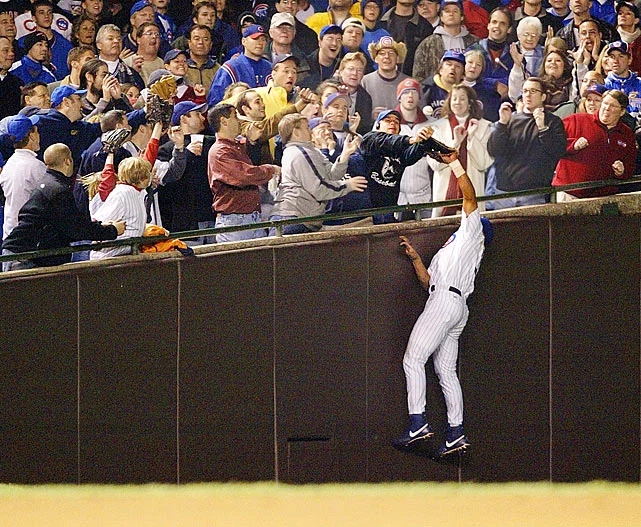
Everyone knows the saying: ‘A picture speaks a thousand words’. It’s a cliche that has been beaten to death over the years, yes, but it’s also true. However, what’s often not considered is that not everyone hears the same thousand words. The story that one person takes from an image can be entirely separate from that of everyone else. For example, take the following image:

The infamous ‘Steve Bartman Incident’

If you ask ten different people about what that image is, you would get ten different answers. Granted, they may have similarities, but they will for the most part have separate views. Ask someone who knows nothing about baseball, and they’ll tell you it’s a guy trying to catch a ball. Ask an MLB fan, and they’ll tell you it is an infamous moment in baseball history. Ask a Miami Marlins fan, it will be one of their favourite sporting memories. Ask a Chicago Cubs fan, it’ll be one of their worst. Ask my mum, and she’ll say “Jed I’m trying to get ready for work I don’t have time for this right now”. If you ask Steve Bartman what that image is of, he will most likely tell you it is of the worst moment of his life.

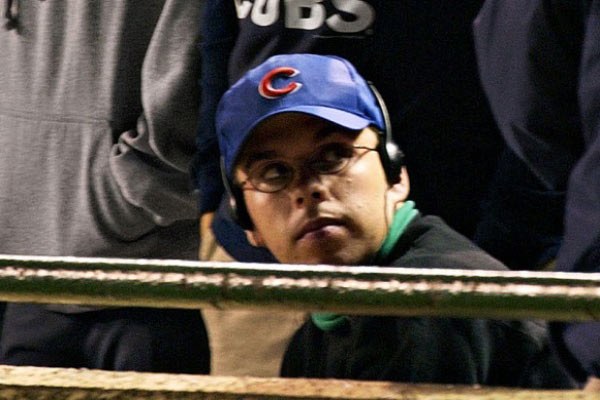
Bartman is the man who can be seen in the photo trying to catch the ball. No, not the guy in the Chicago Cubs uniform, that’s Moisés Alou. THIS is Steve Bartman.

Steve Bartman

He’s the Cubs fan in black, knocking away what was potentially a game changing catch for his team. If Alou had made that catch, the Cubs would only need four more outs to win the game (3-0), and the series (4-2). But Bartman knocked it away, he himself trying to catch the foul ball. The Marlins went on to score 8 runs, winning the game 8-3. The next game, they won the series, 4-3.

So when Bartman looks at the image, it tells the story of himself, ruining his own teams championship aspirations, and forever changing his own life. Chicago sports fans might be inclined to agree with him. Miami supporters might consider it divine intervention, paving the way for their 2003 World Series win. Some people might consider it an all time sporting moment, capturing the moment things go wrong, and the fickle nature of competitive sports. Some will just see a man trying to catch a ball.

What can be drawn from all of this? Who you are as a person determines how you look at an image, and determines exactly what you see.

Game 7: An Audience With The King

June 2016. Oakland California. Oracle Arena. The NBA Finals, tied at three games a piece. The Cleveland Cavaliers on the pinnacle of making history, becoming the first team to ever come back from a 3-1 game deficit to win a championship. On the line for the Golden State Warriors: a second straight championship. The Warriors had league MVP Stephen Curry. They had the best regular season record ever recorded, 73 – 9. They had home-court advantage. They had the series lead. They should have won.

LeBron James lays in the ball through two Warriors players; Marreese Speights and Andre Iguodala.

My friends and I were all around 16, and had been obsessed with the NBA for years. This was the biggest game we’d ever seen. Every effort was being made to watch it. In class rooms throughout the school, there were students huddled around desks, looking into pencil cases, friends laps, or wherever the phone was hidden. From memory, ours was supported by a Biology textbook. Officially, there were 30.8 million viewers of this game, making it the largest audience for an NBA game in 18 years. There was no way we were missing it.

Stephen Curry flexing after making difficult shot, which he was fouled on.

The game had everything. Rivalry. Suspense. Big names. It had those intangibles that makes sports so great, and so heartbreaking. No lead felt safe, no one knew what would happen. The series shouldn’t have gotten to this point; we were in uncharted territory. With two minutes left, scores were tied. 89 – 89. That’s when it happened.

The greatest moments in sports are ones that earn ‘The’ status. ‘The Shot’ by Jordan against Ehlo. ‘The Rumble In The Jungle’, Ali vs Foreman. ‘The Hand of God’ from Diego Maradona. I would say that to etch your name in the history books, an athlete needs their ‘The’ moment. In the dying moments of game seven, the championship on the line, LeBron James got his.

‘The Block’: LeBron James blocks the shot of Andre Iguodala.

At that moment we all knew the Cavaliers had won. Yes, the scores were still tied. But after a play like that? How could they not win. A minute later, Kyrie Irving hit a three-pointer putting Cleveland up three with 53 seconds left. That would be the last basket of the game, and the Cleveland Cavaliers would win their first ever NBA Championship.

The game was jaw-dropping. No one could find the words to describe it. History had been made. All you could do was sit there, and appreciate what you just saw. I wasn’t in the stadium for it, but I was still part of the audience, as were millions of people around the world. What I took away from that game was sports ability to unite people. The only negative? I was going for the Warriors.

The Cleveland Cavaliers, 2015-16 NBA Champions.