Living Rebel: Dr. Ngaire Brown

BCM115 Introduction to Screen Media – Assessment 1

Ngaire Brown shares an intimate connection with the ocean
She stands in solitude, kept company by the waves
A fiercely proud Indigenous woman, Ngaire displays her culture to the world
Finding peace within the salt water
Strength and empowerment come from within
Wisdom, experience and gentleness
Dr. Ngaire Brown, a Living Rebel
Returning to the water

Project Statement

Dr. Ngaire Brown is a Yuin nation woman and a senior medical practitioner. She has studied and has qualifications in medicine, public health, medical law, bioethics, human rights and primary care. She is a trailblazer, who does thing her own way. She is a rebel in every sense of the word. She stands out from the world, and to capture this, it was necessary to show her by herself. Solitary, and powerful. In considering this, a large part of my inspiration was the photo series ‘Isolation: Afghanistan’ by French photographer Martin Middlebrook. It portrays individuals in their environment, showing them in solitude, but comfortable and in touch with their surroundings.

I then took a number of closer, intimate photos of her features, to personify her and to show who she is as an individual. Photos of her tattoos, a heavy link to her culture that she proudly displays, were taken in the same way as those in the photo series ‘Love Marks: Tattoos Deeper Than Ink’ by Stacy-Ann Ellis. While that series documented tattoos dedicated to lovers, I wanted to capture the same intimacy and connection through Dr. Browns.

I took photos of her hands, and of her face, to familiarise her to the audience as well as to represent the many aspects of her personality. They show a loving, caring and gentle side to her, as well as showing her wisdom, her knowledge and integrity. I took a photo of her face, similar to the portrait work of photographer Ben McRae, in order to make the audience truly feel like they had met Ngaire. Finally, the last shot of the series shows Ngaire walking away, towards the ocean. Similar to the above shots, this took elements of the photos in ‘Isolation: Afghanistan’, and the shot was intended to feel like a departure, as if she is walking away at the end.

My photo essay was for the most part narrative form, telling the story of a chance encounter with a living rebel. Dr. Ngaire Brown. The viewer sees her from afar, then approaches. They are shown her features, and they begin to understand her. The series ends with the viewer and Ngaire once again separating. The encounter is over, but the viewer is left with the feeling of having met a new person. There are also elements of essay involved, through the themes of the ocean, and Ngaires’ Indigenous heritage.
The Complex Image of Steve Bartman

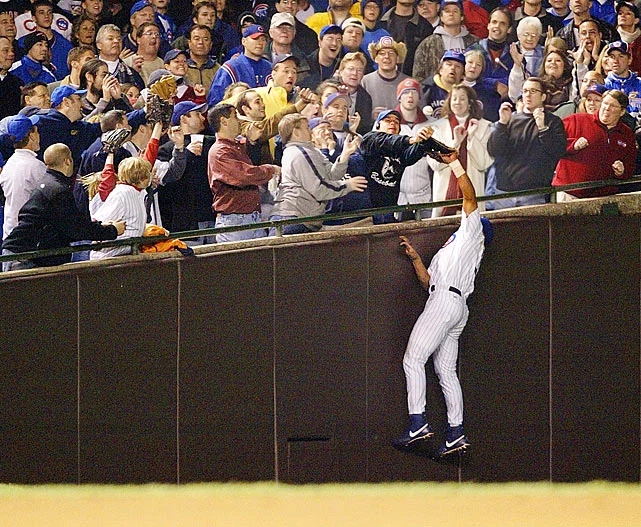
Everyone knows the saying: ‘A picture speaks a thousand words’. It’s a cliche that has been beaten to death over the years, yes, but it’s also true. However, what’s often not considered is that not everyone hears the same thousand words. The story that one person takes from an image can be entirely separate from that of everyone else. For example, take the following image:

The infamous ‘Steve Bartman Incident’

If you ask ten different people about what that image is, you would get ten different answers. Granted, they may have similarities, but they will for the most part have separate views. Ask someone who knows nothing about baseball, and they’ll tell you it’s a guy trying to catch a ball. Ask an MLB fan, and they’ll tell you it is an infamous moment in baseball history. Ask a Miami Marlins fan, it will be one of their favourite sporting memories. Ask a Chicago Cubs fan, it’ll be one of their worst. Ask my mum, and she’ll say “Jed I’m trying to get ready for work I don’t have time for this right now”. If you ask Steve Bartman what that image is of, he will most likely tell you it is of the worst moment of his life.

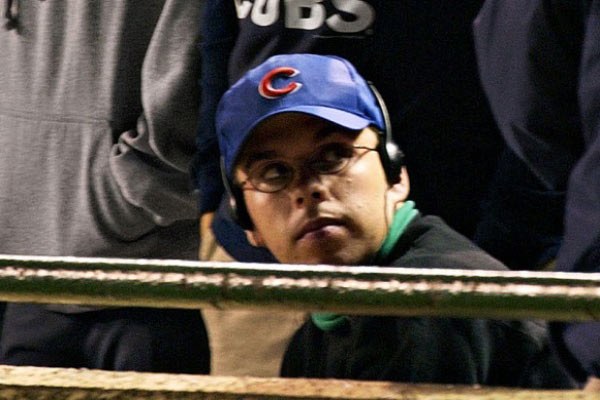
Bartman is the man who can be seen in the photo trying to catch the ball. No, not the guy in the Chicago Cubs uniform, that’s Moisés Alou. THIS is Steve Bartman.

Steve Bartman

He’s the Cubs fan in black, knocking away what was potentially a game changing catch for his team. If Alou had made that catch, the Cubs would only need four more outs to win the game (3-0), and the series (4-2). But Bartman knocked it away, he himself trying to catch the foul ball. The Marlins went on to score 8 runs, winning the game 8-3. The next game, they won the series, 4-3.

So when Bartman looks at the image, it tells the story of himself, ruining his own teams championship aspirations, and forever changing his own life. Chicago sports fans might be inclined to agree with him. Miami supporters might consider it divine intervention, paving the way for their 2003 World Series win. Some people might consider it an all time sporting moment, capturing the moment things go wrong, and the fickle nature of competitive sports. Some will just see a man trying to catch a ball.

What can be drawn from all of this? Who you are as a person determines how you look at an image, and determines exactly what you see.

Game 7: An Audience With The King

June 2016. Oakland California. Oracle Arena. The NBA Finals, tied at three games a piece. The Cleveland Cavaliers on the pinnacle of making history, becoming the first team to ever come back from a 3-1 game deficit to win a championship. On the line for the Golden State Warriors: a second straight championship. The Warriors had league MVP Stephen Curry. They had the best regular season record ever recorded, 73 – 9. They had home-court advantage. They had the series lead. They should have won.

LeBron James lays in the ball through two Warriors players; Marreese Speights and Andre Iguodala.

My friends and I were all around 16, and had been obsessed with the NBA for years. This was the biggest game we’d ever seen. Every effort was being made to watch it. In class rooms throughout the school, there were students huddled around desks, looking into pencil cases, friends laps, or wherever the phone was hidden. From memory, ours was supported by a Biology textbook. Officially, there were 30.8 million viewers of this game, making it the largest audience for an NBA game in 18 years. There was no way we were missing it.

Stephen Curry flexing after making difficult shot, which he was fouled on.

The game had everything. Rivalry. Suspense. Big names. It had those intangibles that makes sports so great, and so heartbreaking. No lead felt safe, no one knew what would happen. The series shouldn’t have gotten to this point; we were in uncharted territory. With two minutes left, scores were tied. 89 – 89. That’s when it happened.

The greatest moments in sports are ones that earn ‘The’ status. ‘The Shot’ by Jordan against Ehlo. ‘The Rumble In The Jungle’, Ali vs Foreman. ‘The Hand of God’ from Diego Maradona. I would say that to etch your name in the history books, an athlete needs their ‘The’ moment. In the dying moments of game seven, the championship on the line, LeBron James got his.

‘The Block’: LeBron James blocks the shot of Andre Iguodala.

At that moment we all knew the Cavaliers had won. Yes, the scores were still tied. But after a play like that? How could they not win. A minute later, Kyrie Irving hit a three-pointer putting Cleveland up three with 53 seconds left. That would be the last basket of the game, and the Cleveland Cavaliers would win their first ever NBA Championship.

The game was jaw-dropping. No one could find the words to describe it. History had been made. All you could do was sit there, and appreciate what you just saw. I wasn’t in the stadium for it, but I was still part of the audience, as were millions of people around the world. What I took away from that game was sports ability to unite people. The only negative? I was going for the Warriors.

The Cleveland Cavaliers, 2015-16 NBA Champions.